Fog lights are useful when your visibility is decreased such as when it snows or there is thick fog or mist covering the road ahead. They can also help when there is heavy spray on the motorway.
Using your high beams in these conditions can actually reduce your visibility as the bright light reflects off the fog or mist, making it even harder to see ahead.
The highway code states that you must not use front or rear fog lights unless visibility is seriously reduced. Using this terminology means that this is a requirement and not a recommendation.

This is because incorrect use of fog lights can dazzle or blind road users, while rear fog lights can obscure your brake lights. The general rule is that you should only use them when you cannot see more than 100 metres ahead, this also applies to headlights. The highway code also states that you must switch both front and rear fog lights off when visibility improves.
You don’t always need to switch on both front and rear fog lights, the front ones should never be used to light the road in normal driving conditions, that’s what your headlights are for. Use your common sense, if it’s foggy but you can still see the road ahead, then there’s no need to have them on.
Rear fog lights should always be switched on whenever visibility is poor, they are there to alert other road users of your presence, not just to give you a clearer view of what’s behind you.
Depending on the make and model of your car, there are a number of ways to turn on your fog lights. There will either be a separate button on the dashboard or a function on your indicator stalk which will allow you to control the fog lights.
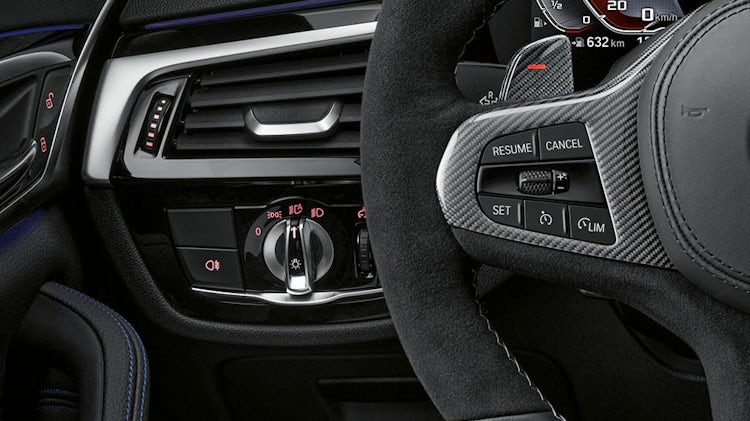
Some cars have a rotary knob on the dashboard which can be pulled or pushed to activate the fog lights, others will have buttons next to this knob which will accomplish the same thing.
Most vehicles will have a symbol that illuminates on the dashboard or driver display to show that the fog lights are on – just like with the head lights.
The symbol for the front fog lights (if fitted) is an oval-shaped lamp with three diagonal lines intersected with a wavy vertical line to the left of it.
The symbol for the rear fog lights is an oval-shaped lamp with three horizontal lines bisected by a wavy vertical line on its right.
The Highway Code states drivers must switch the fog lights off when visibility improves. Leaving the front ones on may dazzle other drivers ahead, while the rear fog light (or lights) can obscure the brake lights. Neither the front nor rear fog lights may be left on when the vehicle is parked. You may get fined for incorrectly using your fog lights.
All cars must have at least one rear fog light as a legal requirement in the UK. They must be fitted to the centre or offside rear of a vehicle. Front fog lights are not required to be fitted, and most manufacturers reserve them for their more expensive models. You will generally see them mounted low down into the bumper, below the headlights.
You may notice a thin LED strip on the front of some cars, these are Daytime Running Lights (DRL) and have been fitted to all new cars in the UK since 2011. They turn on whenever the car is switched on and are there to make the car more visible to other road users. They do not perform the same function as front fog lights.