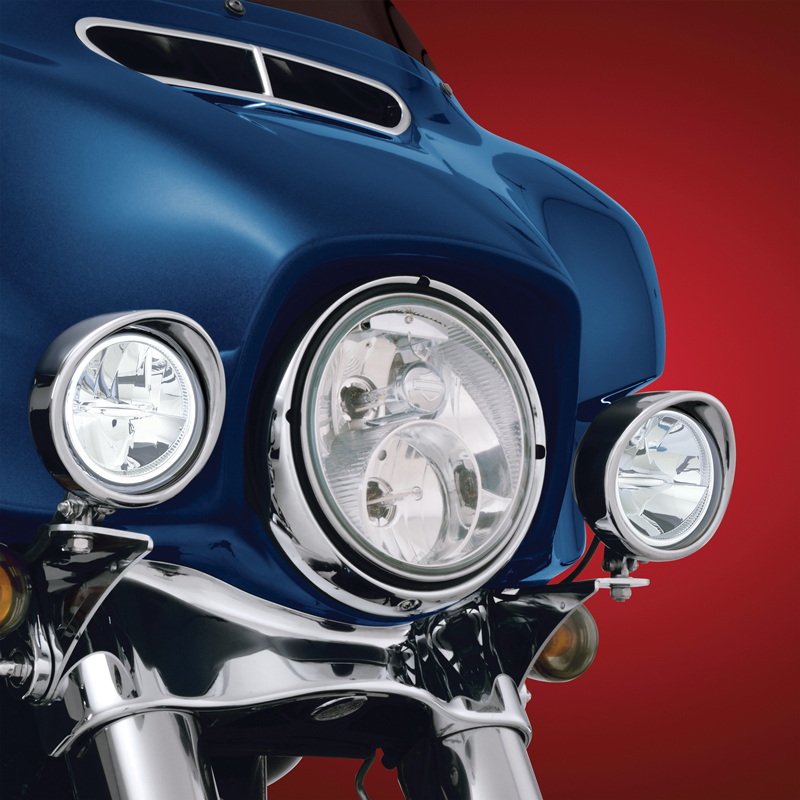
As winter approaches and daylight hours get shorter, you're more likely to find yourself riding at dusk or after dark. The headlights on most new bikes are excellent compared to what they were a decade or so ago, but whether you're driving a busy highway in broad daylight or a desolate dual carriageway in Deer Country at night, more Light is better than less. Adding a pair of running lights or highly visible spots can help you see even better than the best stock headlights.
Auxiliary lights fall into three basic types, roughly defined by what you want them to do. Running lights project a narrow beam of light farther than the headlights. Running lights give you more time to react to obstacles in the road, such as potholes or debris that you wouldn't see quickly if you were relying solely on your headlights.
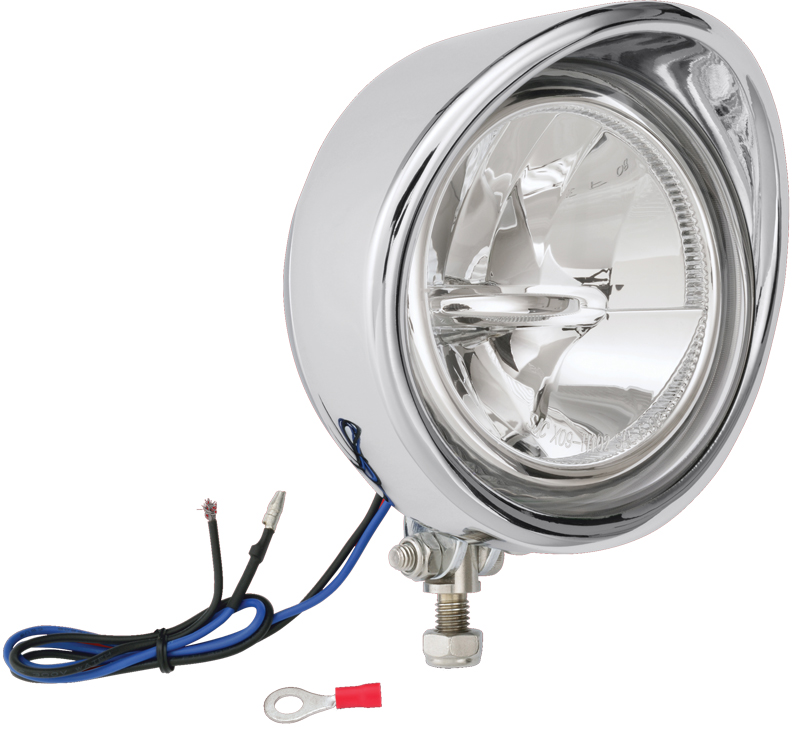
Motorcycle Auxiliary Lighting
Chrome plated LED driver lights. Spotlights act like floodlights, casting a broad beam of light forward, illuminating more of the shoulder than a more narrowly focused driving light. Finally there are fog lights. The idea here is to cast a low level beam that's wide and close to the road so it's easier to see roadside ditches without being aimed so high that it's already hard to see oncoming traffic in the fog .
Halogen bulbs work great in normal headlights, but changing them to LEDs changes the "photometry," or how the light source reflects light off the headlight reflector. The bulb and reflector are designed to be used as a pair, replacing one or the other will malfunction the photometry. But auxiliary lights were designed from the ground up to use LEDs, so out-of-the-box photometry is optimal.
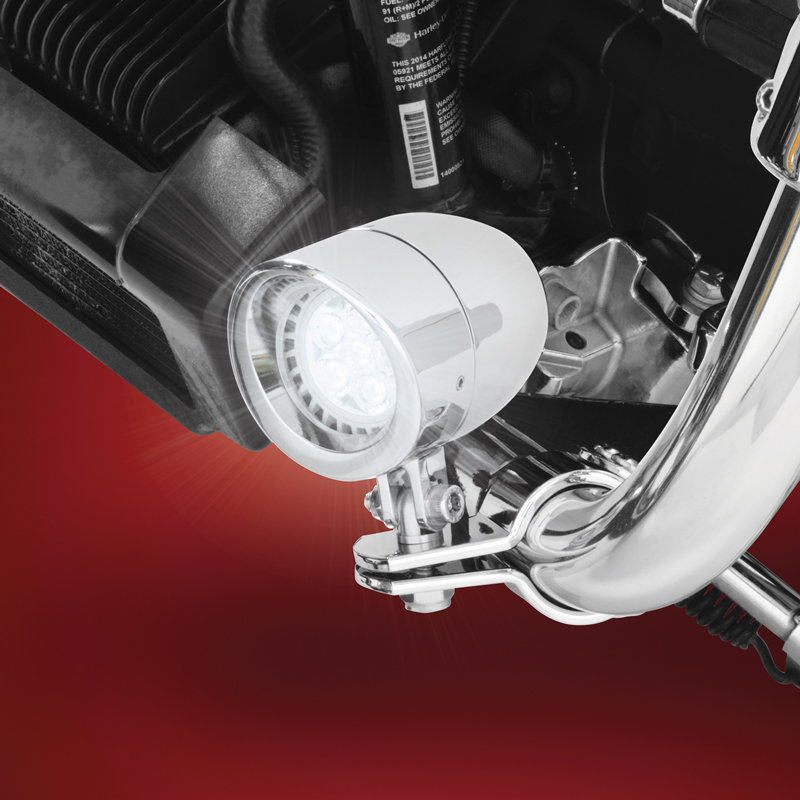
There are other reasons why LEDs rule auxiliary lighting. The latest LEDs are small and light, and the technology is advancing rapidly. Since the smaller lights are lighter, they are less susceptible to vibrations from rough roads and are more durable than halogen bulbs. LEDs are also very directional - the light will go where you want it and nothing else.
But perhaps the best reason to choose LED auxiliary lighting is that LEDs draw very little power from the bike's electrical system. This is important on smaller bikes where the charging system might not be very powerful, and on larger bikes with a lot of power-hungry accessories like heated grips, radios, and hookups to heated clothes.
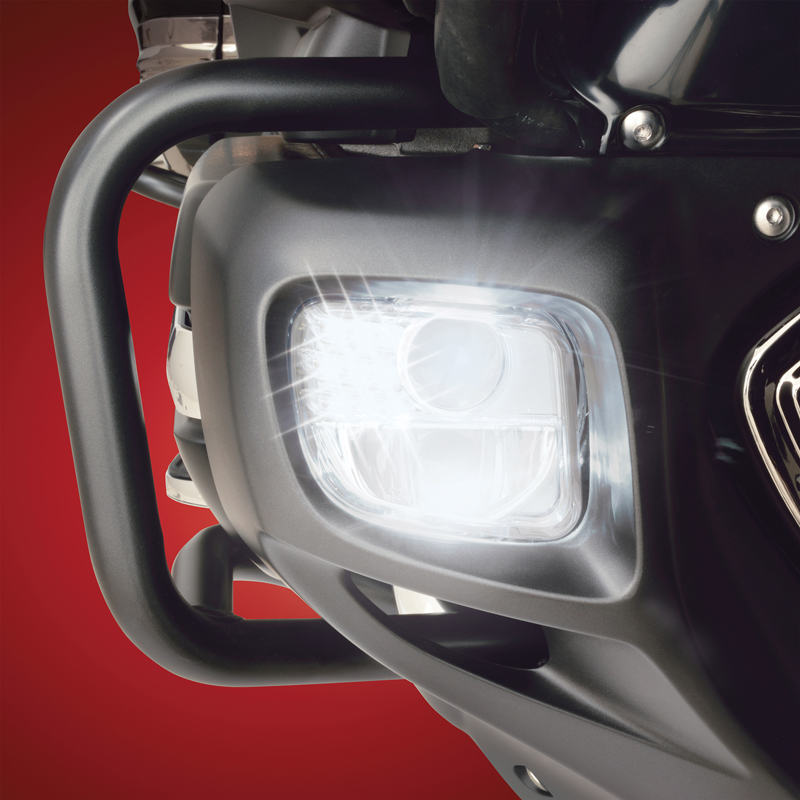
Motorcycle Auxiliary Lighting
Large bike parts mini LED light kit for Harley Davidson.
Where to install auxiliary lights varies by purpose and where available, but some states prohibit placing them at a certain height above the headlights or below the road surface. Aiming them so that they illuminate the road without blinding oncoming drivers is also important, and may require on-the-fly adjustments by raising or lowering the angle of the front of the bike with the addition of a passenger or a large amount of luggage.
One final piece of advice: "Don't skimp on lighting. Cheap no-name LED auxiliary lights that don't work, but quality products are slightly more expensive, and they're almost certainly not DOT-approved."