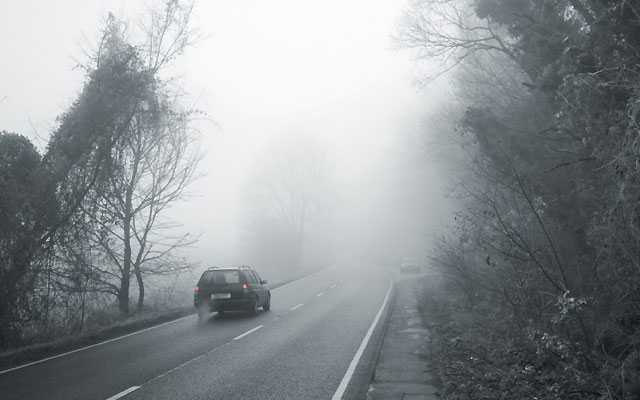
Fog lights are extra front and/or rear lights on some vehicles that are designed to make it easier to see and be seen in foggy conditions.
When fog reduces visibility, the moisture in the fog reflects the light from normal car headlights back, making glare worse.
The difference between fog lights and normal headlights is how they cut through fog to reduce glare:
Normal headlights aren't angled downwards in the same way and are mounted higher up on the front of the car.
It’s the law for cars to have a rear fog light. Many have front fog lights too, but some modern cars use daytime running lights instead of front fog lights.
You can check your dashboard, steering wheel stalk or vehicle hand book to see if your car has front fog lights.
Fog lights can help you to see and help other drivers see you if the weather is very misty or foggy.
If you’re not sure, it’s best to use your common sense. You don't have to use fog lights, but your insurer might take issue if you're in an accident in poor visibility and they weren't on.
Almost 1 in 10 drivers* say they rely on their car’s automatic lights all the time. But automatic lights won’t come on if it’s foggy but bright, as they rely on light-level sensors.
Check whether you need to switch yours on manually. And watch out for almost-invisible cars whose drivers haven’t got theirs on.