How on earth do you decide to use the right motorcycle lights without wasting money?
Proper motorcycle lights are important and we had to improve on DR's lights as they are more like candle lights than modern fluorescent lights. Buying lights for your motorcycle can be a confusing nightmare. As most of us know, asking what lights or recommendations to ask on social media is like sinking into a quagmire.
Light branding throws around acronyms and words, which adds to the confusion. Then there is the price. It's either a cheap and obnoxious unit, or a very expensive one.
Motorcycle aftermarket lights are a great way to help improve visibility and improve riding safety.
It's not a good idea to spend over $1000 to look like a rickety Christmas tree floating down the road like some BMW boys do. Visibility is essential, but there's a line that even that much light won't save your skin.
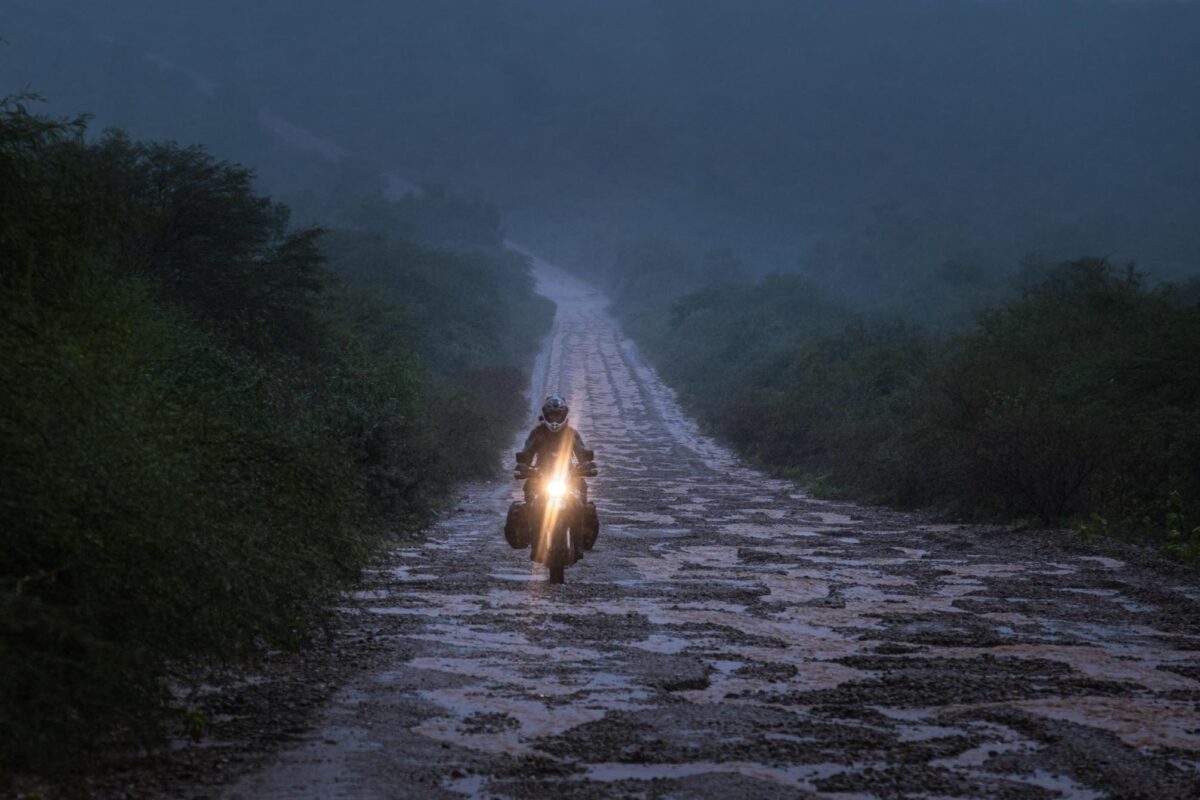
Depending on your needs, it is important to determine where to stop by adding lights. The idea is to have better visibility at night or in foggy conditions. And of course, making sure other road users can see us. Generally, we don't ride at night. It doesn't matter which country. However, when things go wrong and bad situations happen, night riding is unavoidable.
Better LED lights or halogen lights make dual sport adventure riding safer. Installing spotlights aftermarket can help with dark rides
For off-road use, the position of the lights is very important. Bumps, spills, and drops can eventually damage those expensive lights. I remember when BMW came out with the 1200GSA in 2007, those two lights were bolted to the bumper bars on either side of the bike and it was going to be a disaster for the rider. This has happened to many of my friends and people we know.
● Lights mounted on the side crash bars of motorcycles will eventually snap off in a fall. They're not designed to take impact, which is why we mounted the LED light bar under the headlights.
● Do not install lights directly below or near the indicator light, as oncoming motorists cannot see the indicator light flashing above the bright beam of the spotlight.
The first limitation with aftermarket lights is that the motorcycle electrical system is often the deciding factor in how many megawatt football stadium lights you want to install. For simple upgrades that shouldn't cause problems, you can start by improving the output of the built-in headlights.
Replace halogen or LED headlight bulbs and installation is complete. If you want more light, the next option is to add a set of auxiliary driving lights. The more lights you add, the more amps you draw, so it's a good idea to use LEDs as they draw less current than halogen lights.
First, I try to stay away from exterior lights unless they can be installed away from hazards. On most dual-sport motorcycles, a light bar can be mounted above the front fender. The lights are well placed and safe. Expensive is not a measure of the quality of a good thing.
Still, there is no qualified information or product that is reasonably priced and has any verifiable credentials of quality.
All LEDs are definitely not created equal!
As far as I know, LEDs are in the motorcycle business (less heat, use less power, more resistant to vibration, etc.) but there are LEDs, and then there's the parade of LEDs that are complete garbage. Inexpensive LEDs can have light spreads as low as 5 degrees, and they can be very dim.
The really good LEDs out there have 120 degrees of light spread and put out 4,000 mcd per LED - but you'll be shelling out your kid's college bills for them.
Can you increase light output with OEM headlights?
Opinions seem to vary and a lot seems to depend on the size, shape and quality of the motorcycle headlight reflector and the bike's wiring. This is where they really help, they have experience with this and so are able to provide the correct information, which is what happened when I installed the LED headlight H4 bulbs.
Motorcycle riders buy lighting kits to be visible to other motorists, to see terrain better and better road conditions when operating at night. Being seen by others during the day is really the biggest advantage of bright white light.
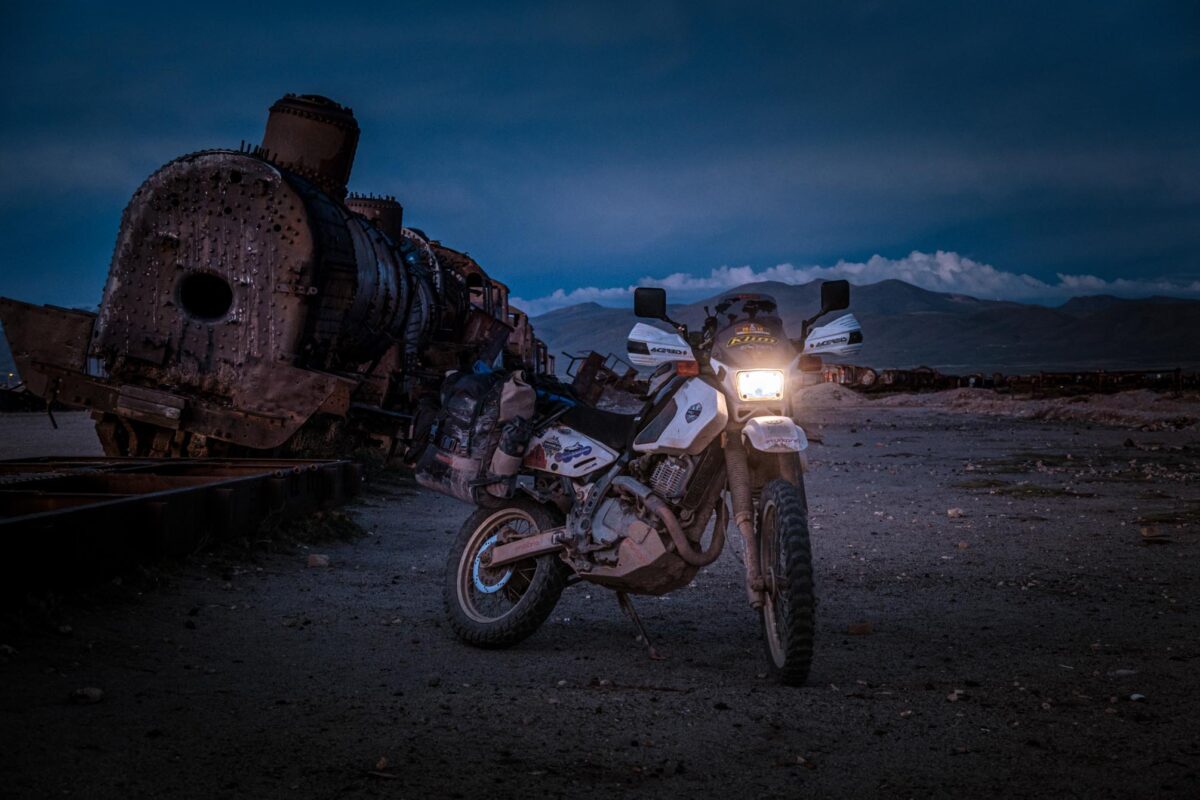
Bolivia, like Africa, does not recommend cycling at night.
A lot has changed since the early days. At first we were able to get decent light output by using chip-on-board LEDs, which was ok for off-road use, but we did have light scattering and couldn't produce low beam cutoff modes, they were very similar to the HIDs available at the time.
Once we started trusting each other, we started sharing information and trying to mimic halogen headlight bulbs. Far from perfect, these early versions were indeed copied over and over again, and many of the ones you see on Amazon today are direct or indirect copies of those early bulbs.
How to make an informed decision when looking for motorcycle lights?
There is cheap stuff and then it moves on to very expensive pretentious lamps that many people just buy because they think more expensive equals quality.
This is a difficult question to answer. For us, we absolutely hate judging LED auxiliary lights in lumens, it's meaningless information and usually 100% exaggerated by some lighting companies.
An Isolux chart with Lux measurements is the only true way to judge light on paper. How about the beam pattern. Thermal management, brackets that won't break, and premium wiring harnesses?
One thing that people really miss is thermal management, when you turn on the LED light it's usually pretty bright. However let it sit there for a few minutes and you can actually see it dim, which is very common with cheap lights and even some high end ones.
This also goes hand in hand with the large lumen rating. If a particular LED emitter is rated at 1000 lumens and the company claims it has a 4 emitter LED light that puts out 4000 lumens, then they are playing the lumens game. I'm still trying to figure out how a 1000 lumen emitter can put out 1700 lumens of light.
You can't run a light at 100% efficiency, and if it's designed to push max lumens, it won't be able to cool itself and will dim very quickly.
This problem is even worse if it has a lightweight case. Good lights have some weight, which helps to exchange heat by stabilizing the light for long-term use.